I remember watching a family home video of a house party. The quality wasn’t great—it was obvious a child had gotten hold of the camera and passed it around. In the video, you can catch my uncles and aunts dancing, adults drinking and talking, and kids running through the frame cracking jokes. Eventually, the camera lands on me. I’m about eight years old, squinting my eyes with utter sex appeal, bragging, “Take a look at this handsome boy. Damn, I’m so gorgeous.”
It shocked me—not only because it was funny, but because I couldn’t remember the last time I felt that way. What unsettled me was realizing that somewhere along the way, self-doubt had taken over. Most days, I found myself replaying moments when I wished I’d spoken less, or differently, wondering when insecurity had become the default. For a long time, I joked that the confident kid in the video never really existed—that the moment was a fluke, maybe the result of accidentally sipping one of my uncle’s Coronas. Liquid courage, preserved on VHS.
As a kid, I used to say I couldn’t wait to grow up. Adults warned me not to rush it, telling me adulthood wasn’t all it was cracked up to be. What they didn’t know was that I wasn’t chasing freedom or independence. I wanted out of the mental and emotional chaos I lived in. I believed adulthood might finally bring peace.
In high school, one of my favorite shows was Criminal Minds. What fascinated me wasn’t the thrill of watching a murder mystery—it was the profiling. The agents humanized the monsters. They took people who felt terrifying and unknowable and made them understandable. Their actions weren’t excused, but they were explained. Fear became logic.
That idea stayed with me. I realized I could try applying that same analysis to my own insecurities—especially in social situations. I wanted to understand why other people felt so intimidating, why they seemed smarter, funnier, or more charismatic. My coping mechanism became an attempt to mentally “profile” people so I wouldn’t feel overwhelmed by them.
At first, it went badly.
Conversations turned into interrogations. I’d run through questions like: Do you have siblings? What scares you most? What’s the worst thing you’ve ever done? As crazy as it sounds, I thought, How else can you understand someone? I believed I was trying to connect. In reality, I was overwhelming people—and avoiding myself. Eventually, someone asked, clearly annoyed, “Why are you interrogating me?”
That’s when it clicked: everything was one-sided. I was terrified of being rejected, so I never offered anything real in return.
If someone did ask me personal questions, panic set in. Don’t ask about me. My mind raced: Am I staring too hard? Can they hear my heart pounding? I answered with safe, surface-level responses—just enough to seem normal, never enough to be seen.
Eventually, one-on-one conversations felt manageable. In groups, I disappeared. I drifted between friend circles without ever fully belonging. One year, I was a court member for my cousin’s sweet sixteen. We had been practicing for weeks for her birthday performance, mostly spending a few hours together on the weekends as a group. One of the other court members was a girl I was deeply attracted to—beautiful and kind—but I couldn’t bring myself to talk to her. Watching other guys approach her effortlessly crushed me. When one of them succeeded and they later broke up, I called her in complete emotional defeat.
I cried. I told her how much I liked her—how insecure I felt, how unfunny and uncool I thought I was compared to the guy she had dated.
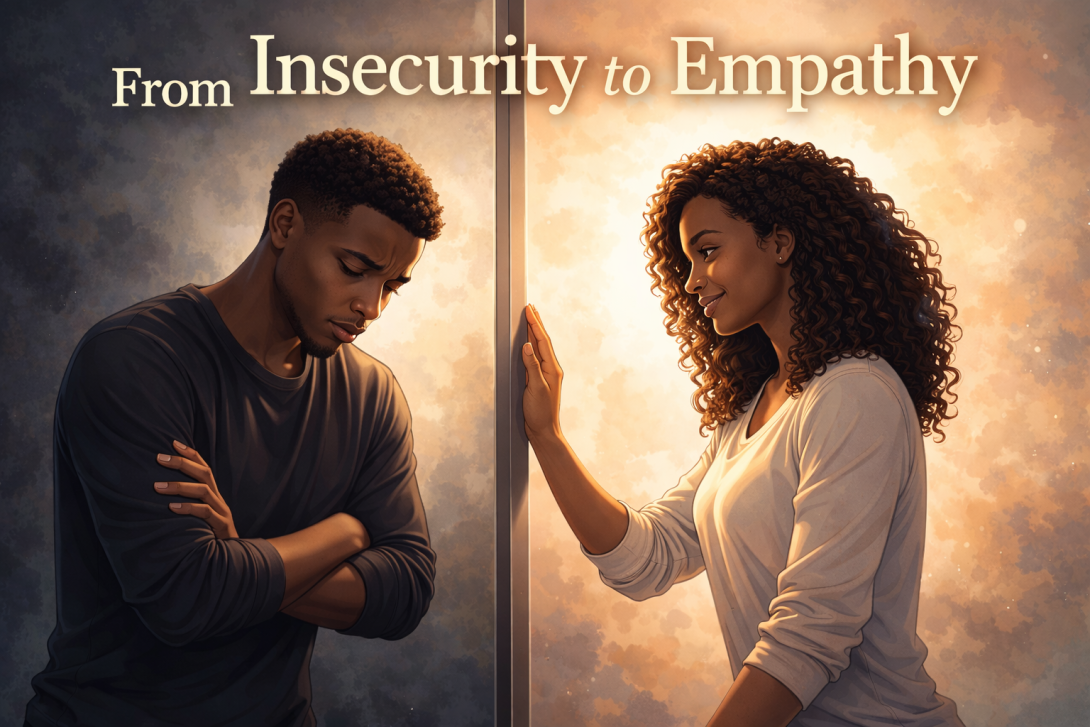
She listened. She didn’t rush me or dismiss what I was saying. She told me not to be fooled by appearances—that even the prettiest, most confident people carry insecurities, get hurt, and get cheated on. Then she gave me advice that stayed with me: look at yourself honestly. Figure out what you want to improve. Learn who you are and what you enjoy. Focus on taking care of yourself.
That conversation changed something. I realized the antidote to insecurity wasn’t simply understanding other people—it was self-acceptance and empathy. She didn’t place herself above me or minimize my feelings. She made herself human, and in doing so, made it safe for me to be human too.
I began listening differently. Instead of scanning conversations for threats, I focused on breathing, on catching key words, and on letting things unfold naturally. In those conversations, despite how anxious I felt, I pushed myself to share and relate where I could. Sometimes, I was surprised by how meaningful those moments were for others.
Over time, patterns emerged. Most people want to be understood. They want joy. Many are carrying pain—sometimes visible, often not.
Recognizing that made it easier to participate, even in groups. I stopped trying to shrink myself or out-analyze everyone else. When someone opens up now, I try to give them space. I let them know we can change the subject at any time. If it feels right, I gently explore how experiences shaped them—or reflect how a situation might feel from the other side.
And somewhere along the way, I realized something simple: connection doesn’t come from hiding insecurity. It comes from sharing it with care—and with self-acceptance. From letting yourself be seen in all forms: awkwardness, fear, and even a little pride, just like that eight-year-old kid who once stared into a camera, completely unafraid of being himself.